Engine Congress 2026
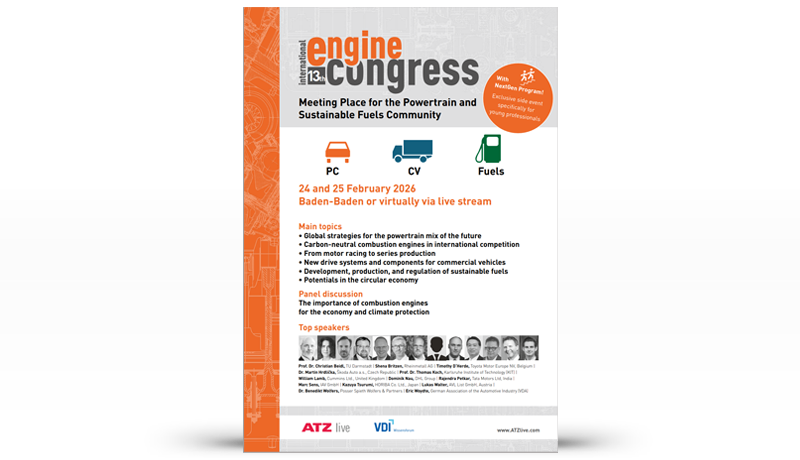
13th International Engine Congress 2026
Meeting Place for the Powertrain and Sustainable Fuels Community
24-02-2026 – 25-02-2026 – Baden-Baden, GER or via live stream
PC – CV – Fuels
Main topics
Global strategies for the powertrain mix of the future
Carbon-neutral combustion engines in international competition
From motor racing to series production
New drive systems and components for commercial vehicles
Development, production, and regulation of sustainable fuels
Potentials in the circular economy
Major panel discussion
The importance of combustion engines for the economy and climate protection
Discussion with Frank Sell, Robert Bosch GmbH, Germany
Focus on Europe's jobs
Panel discussion in the parallel session “Sustainable fuels & energy”
Status / experience report on the verification of renewable fuels in practical use
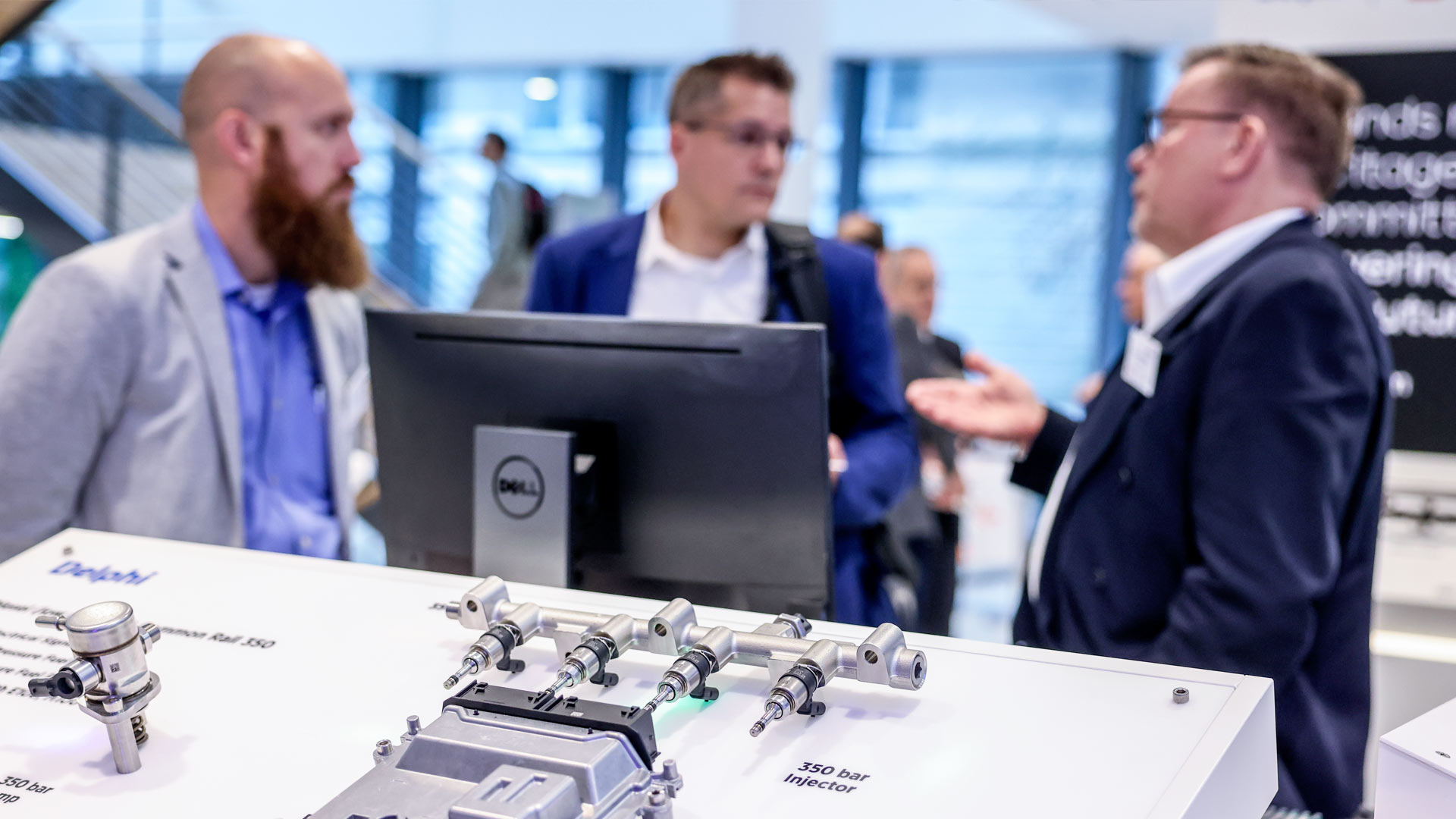
Poster presentations in the exhibition area
HAW Hamburg
Karlsruhe Institute of Technology (KIT)
Leibniz Institute for Catalysis e. V. (LIKAT)
RWTH Aachen University
TU Bergakademie Freiberg
TU Dresden
TU Munich
all Germany
Top speakers
Prof. Dr. Christian Beidl
TU Darmstadt, Germany
Shena Britzen
Rheinmetall AG, Germany
Timothy D'Herde
Toyota Motor Europe NV, Belgium
Markus Döhn
DHL Group, Germany
Dr. Gerhard Holy
AVL List GmbH, Austria
Dr. Martin Hrdlička
Škoda Auto a.s., Czech Republic
Prof. Dr. Thomas Koch
Karlsruhe Institute of Technology (KIT), Germany
William Lamb
Cummins Ltd., United Kingdom
Rajendra Petkar
Tata Motors Limited, India
Frank Sell
Robert Bosch GmbH, Germany
Marc Sens
IAV GmbH, Germany
Kazuya Tsurumi
HORIBA Co. Ltd., Japan
Dr. Benedikt Wolfers
Posser Spieth Wolfers & Partners, Germany
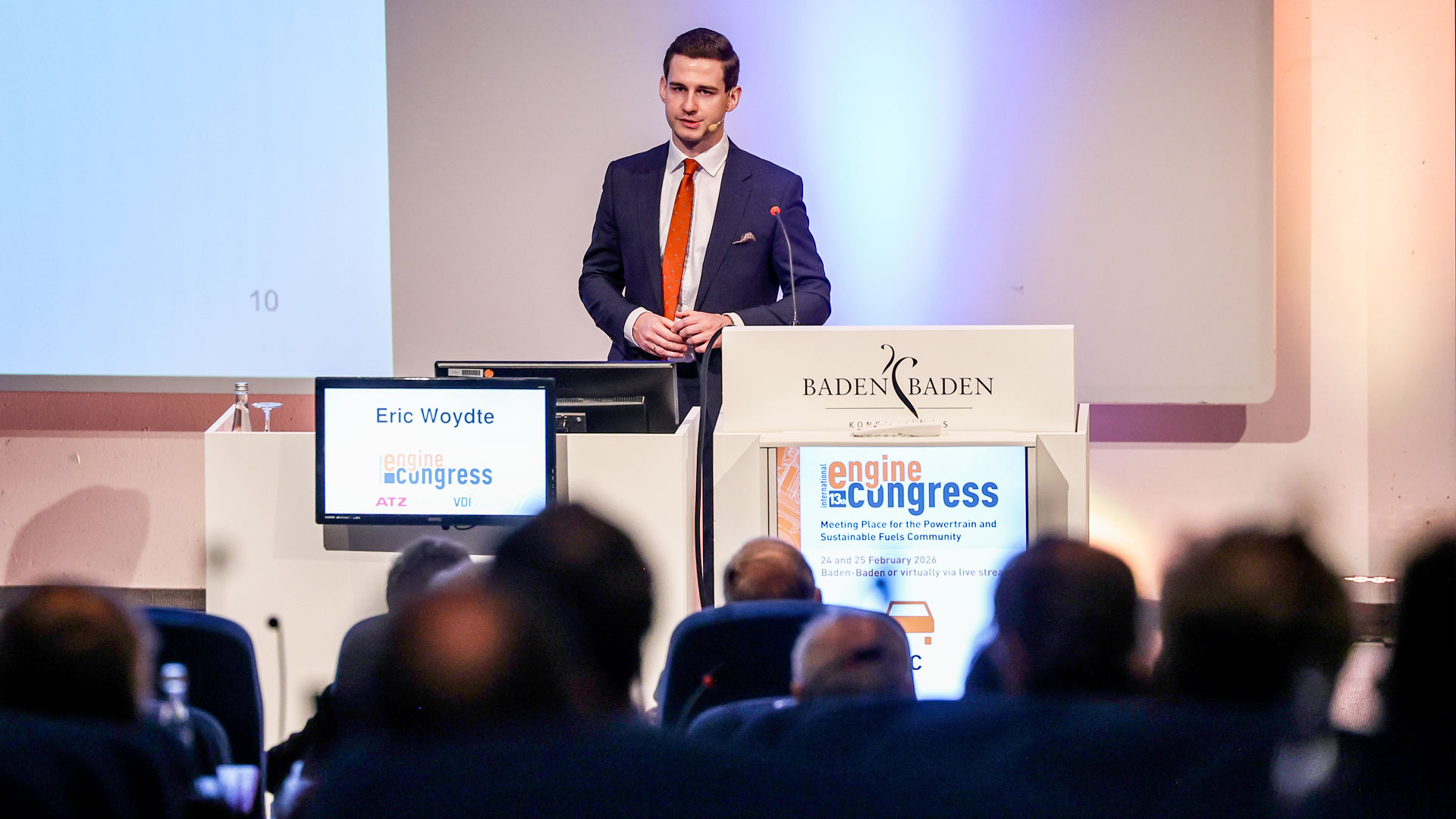
Eric Woydte
German Association of the Automotive Industry (VDA), Germany
Author: Christiane Köllner
News from the 13th International Engine Congress 2026
"Defossil with Style": the Combustion Engine Under Pressure
The courage to adopt a technology-neutral approach that also takes non-fossil fuels and combustion engines into account: Experts at the Engine Congress discuss why a holistic assessment is important.
How will the transformation of mobility take shape? With these words, Dr. Alexander Heintzel, Director of the congress and Editor-in-chief of the ATZ | MTZ Group, opened the 13th International Engine Congress 2026 in Baden-Baden, which is being organized in collaboration with the VDI Wissensforum. According to Heintzel, the combustion engine plays a central role in the transition to low-emission powertrains, especially with synthetic, CO2-neutral fuels. Sustainable mobility must be reconciled with economic stability and technological competitiveness. This should be done in a realistic, technology-neutral, and responsible manner. "Defossil with style", as Heintzel sums it up.
Massive Job Cuts in the Supplier Industry
Social responsibility is a key topic in Frank Sell's keynote speech. The Chairman of the General Works Council Bosch Mobility talks about jobs in Europe in his video message. He represents 80,000 employees in Germany. In view of the comprehensive transformation in the automotive industry, Sell makes it clear that this change must be "social, ecological, and economic". However, he said, the transformation has broken its promises in many areas because it is anything but social. "We are seeing massive job cuts in the automotive industry on a scale never seen before, which is already having a disruptive effect", said Sell. Bosch alone has announced plans to cut a total of 22,000 jobs. Suppliers are particularly hard hit. Yet they are responsible for 75 % of the value added in automotive manufacturing in Europe. According to Sell, they are under extreme threat from Chinese suppliers. The employee representative is therefore calling for local content regulations in Brussels that could help suppliers protect their jobs from "Chinese infiltration". Sell also advocates a new model of cooperation between OEMs and suppliers.
Furthermore, Sell advocates technological diversity – instead of a "one-size-fits-all" solution, there should be an open drive system landscape. Bosch expects that by 2035, one-third of vehicles on the global market will be electric, one-third will be hybrids, and one-third will be gasoline-powered. Against this backdrop, Sell calls on the industry to stop "either/or" debates. Instead, he says, the focus must be on "both/and" in order to maintain and expand technological leadership in the midst of change and to preserve the local automotive industry's understanding of the system.
Automotive Package: “No Technology-Neutral Approach”
Technological openness is also the subject of the keynote speech by Dr. Benedikt Wolfers, lawyer/partner at Posser Spieth Wolfers & Partners. The lawyer assesses the CO2 fleet legislation from a legal perspective. According to Wolfers, the new automotive package for fleet limits and company fleets may say technology neutrality on the outside, but there is no technology neutrality on the inside. The industrial policy goal of focusing technology in passenger cars and light commercial vehicles on battery-electric powertrains and displacing combustion engine technology will continue to be pursued, regardless of whether or not it can be operated in a CO2-neutral manner.
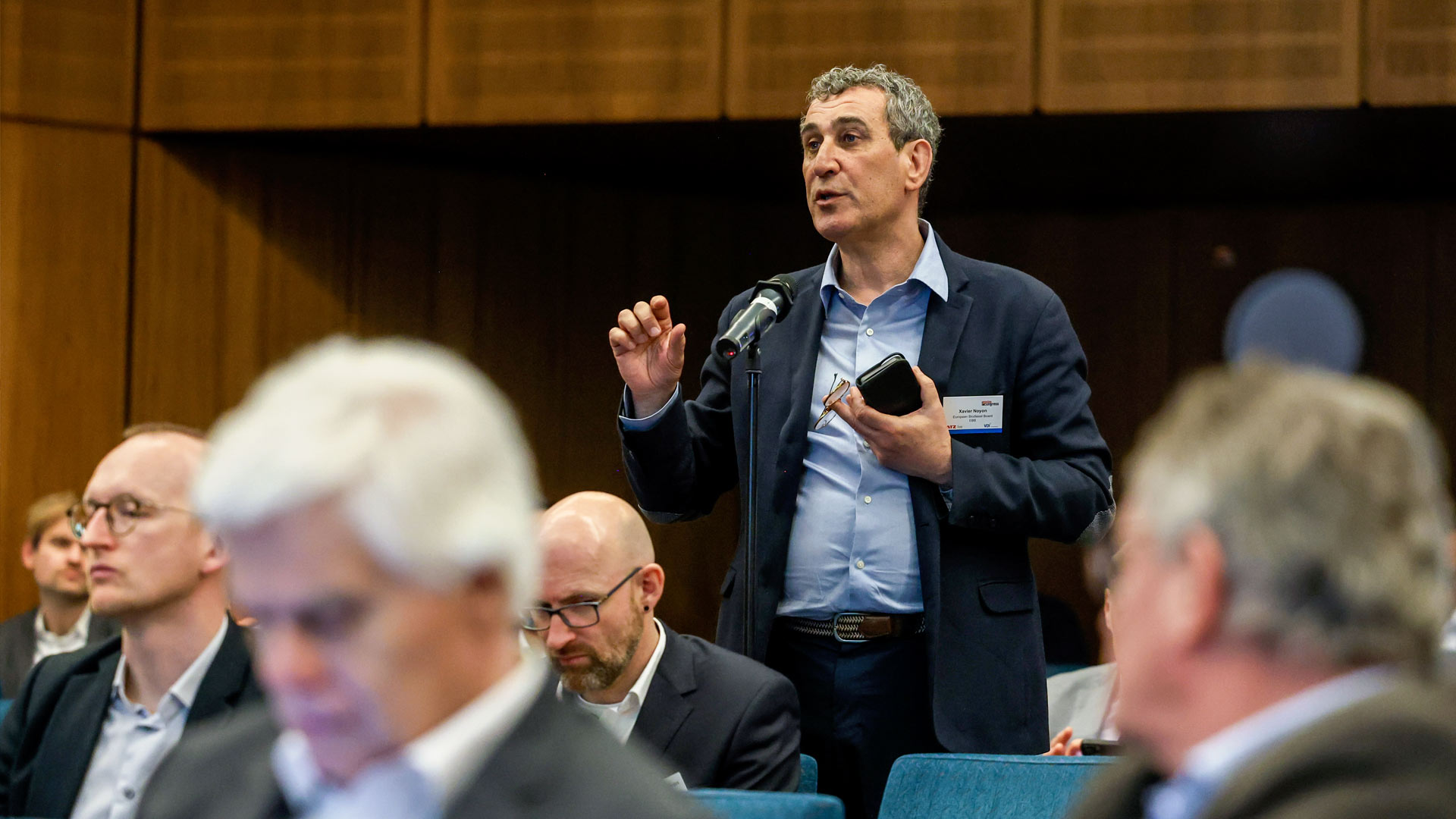
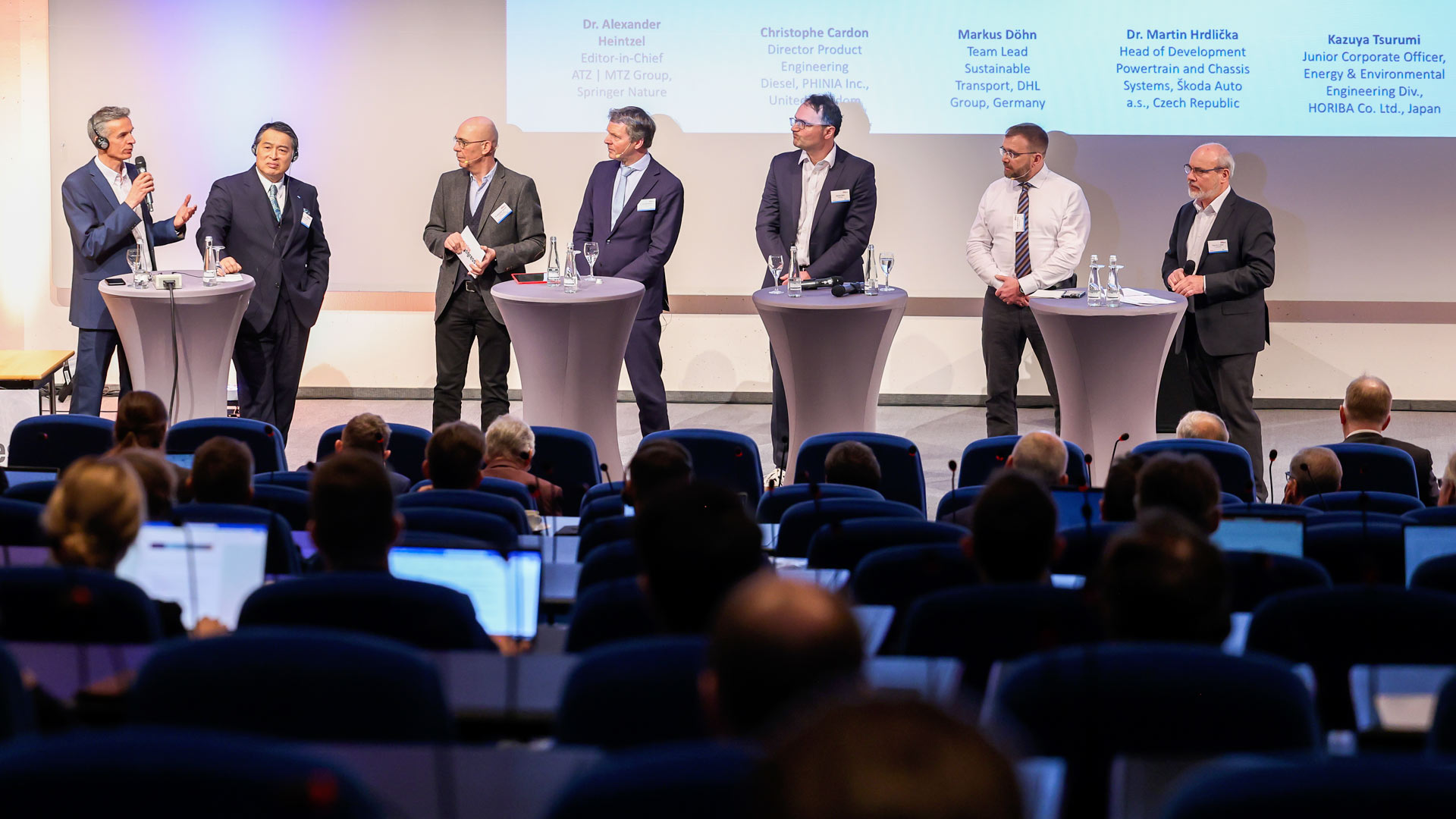
Overall, the December 2025 automotive package does not pursue a coherent regulatory approach, according to Wolfers. It is a political and economic question whether EV or ICEV technology, or both, should be supported. From a regulatory perspective, however, the package does not live up to its name: "It is not a technology-neutral approach", says Wolfers, adding that the labeling is "deceptive". It is important to make this transparent and to have an open political debate, said Wolfers in the panel discussion, which addressed the importance of the combustion engine for the economy and climate protection. Christophe Cardon, Director Product Engineering Diesel at Phinia, also believes that the legislation is not "technology-agnostic", as the panelist made clear.
Challenging but Realistic Goals
From a technician's point of view, predictability and reliability are the most important factors in legislative processes, as Dr. Martin Hrdlička from Škoda Auto illustrates. The Head of Development Powertrain and Chassis Systems, who looks back on Skoda's 130-year history in his keynote speech, calls for challenging but realistic targets and a gradual increase in requirements. Panelist Markus Döhn, Team Lead Sustainable Transport at DHL Group, sums it up once again: Legislation is ahead of the curve.
Kazuya Tsurumi, Junior Corporate Officer, Energy & Environmental Engineering Div. at Horiba, explains how emission regulations can now be technically managed. In his keynote speech, he discusses exhaust gas measurement technologies that are adapted to the different emission regulations and fuel types in different countries. Each fuel type produces different exhaust gas compositions and challenges. Until now, this has required multiple analyzers and sampling systems tailored to the specific test. Horiba has responded by developing a single analyzer platform that uses IRLAM technology (Infra-Red Laser Absorption Modulation). IRLAM combines quantum cascade lasers (QCLs), a compact gas cell, a detector, and algorithms for multi-component analysis. The IRLAM system enables exhaust gas measurement under both laboratory and RDE conditions for different engines and fuels without any special adjustments.
Powertrain Mix for the Future
The plenary presentations at the end of the first day of the congress will focus on the theme of "Powertrain mix for the future". Marc Sens, Senior Vice President Research & Technology at IAV, will present a detailed analysis that focuses on the entire life cycle of fuels, from production to use. Markus Döhn will talk about EREV technology as an accelerator of climate neutrality in heavy-duty transport, and Dr. Malki Maliha, CEO of Formula Future e. V., will talk about Formula Future and promoting young talent with hydrogen and e-fuels. A panel discussion will expand on Frank Sell's presentation on "Focus on Europe's jobs".
Role of the Combustion Engine for the Environment and Society
Key topics of the 13th International Engine Congress 2026, with 300 participants from 19 different countries, will focus on global strategies for the powertrain mix of the future, carbon-neutral combustion engines in international competition, technology transfer from racing to series production, new powertrain systems and components for commercial vehicles, and the development, production, and regulation of sustainable fuels and potentials in the circular economy.
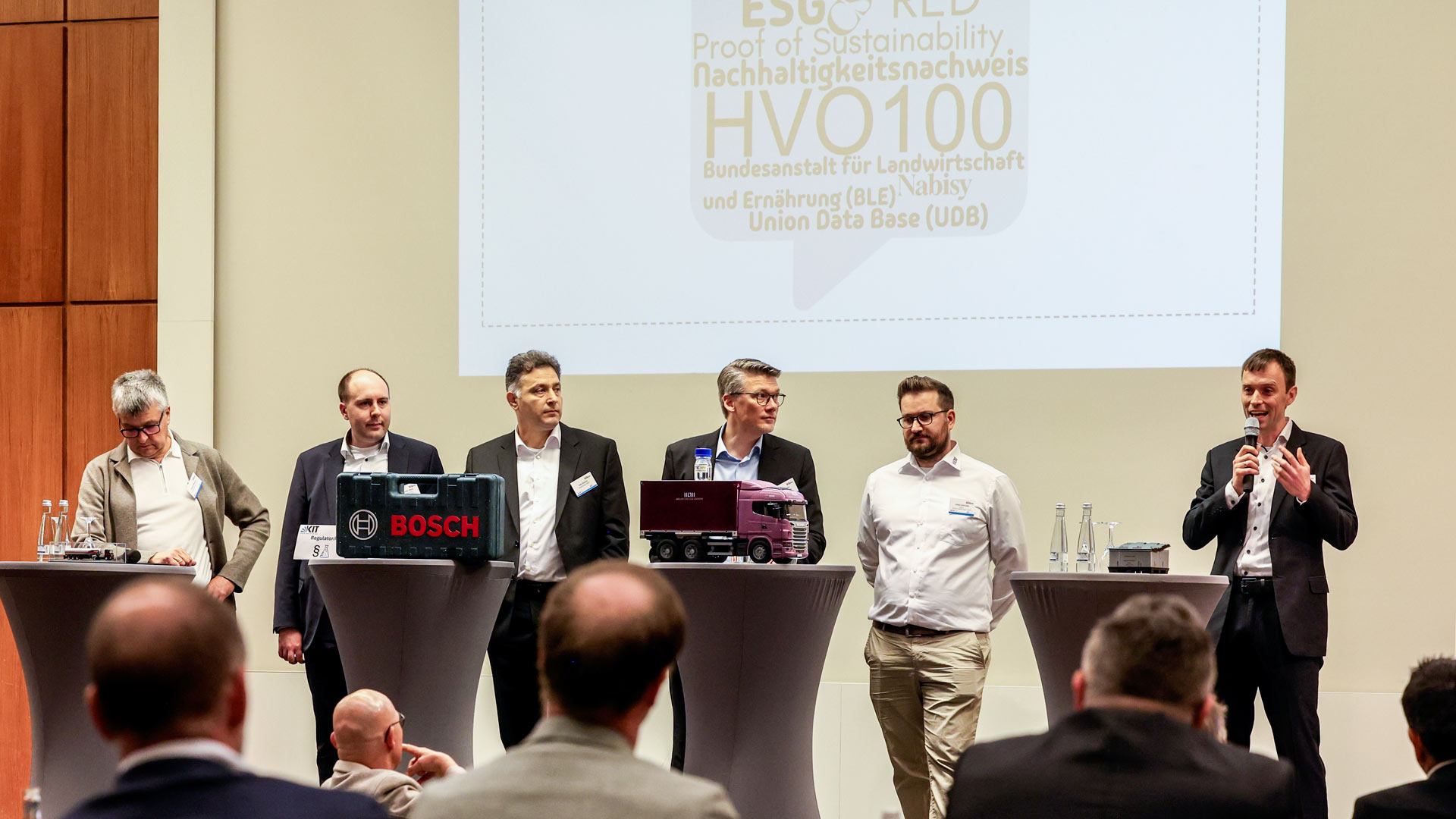
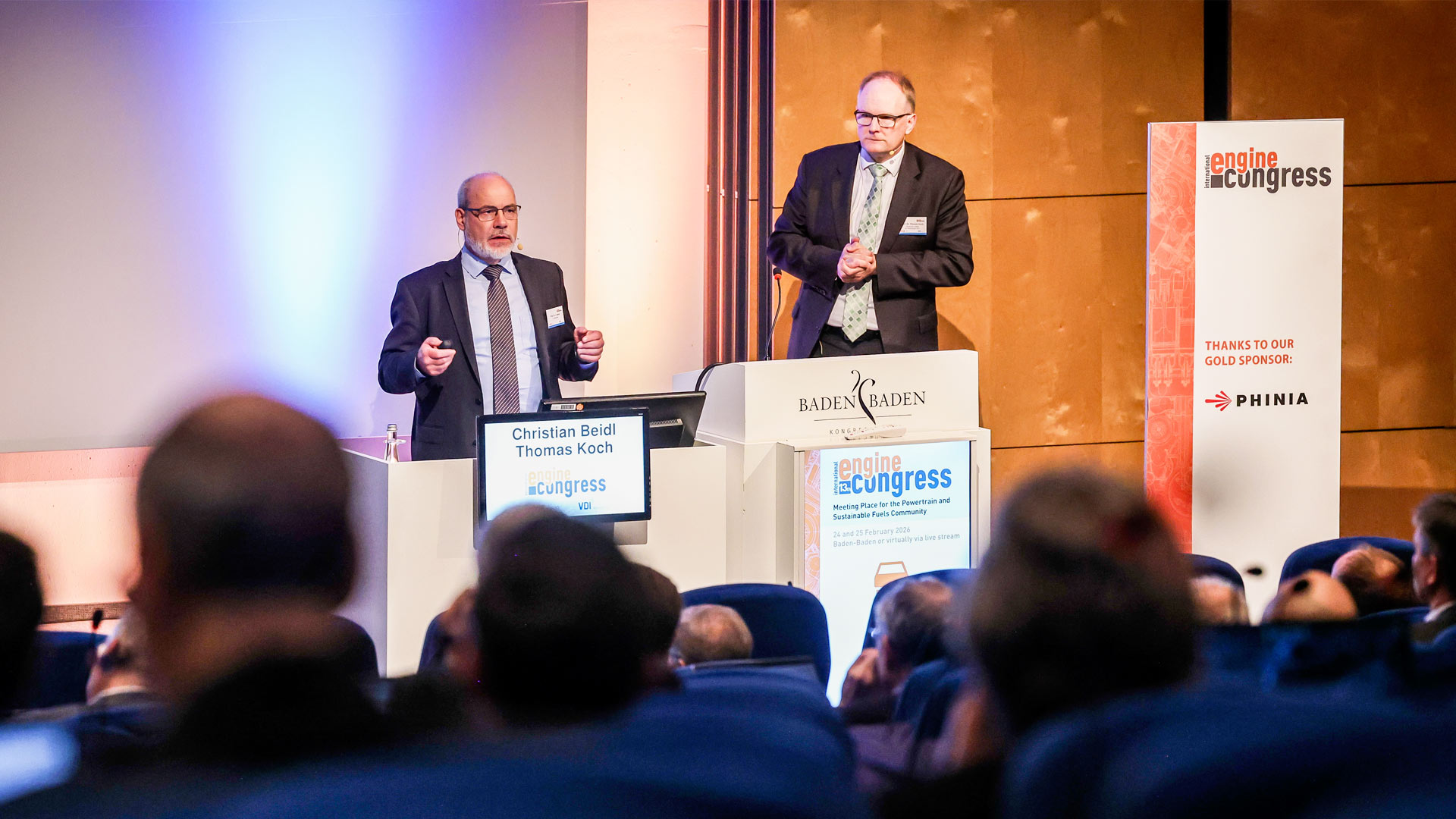
The keynote speeches on the second day of the event will be given by Shena Britzen (Rheinmetall), Prof. Dr. Christian Beidl (TU Darmstadt) and Prof. Dr. Thomas Koch (KIT) as well as Lukas Walter (AVL List). They will address a Giga-PtX project on strategic energy supply, the combustion engine as a long-term solution for the environment and society, and market-compliant solutions for future powertrain portfolios. A panel discussion in the "Sustainable Fuels & Energy" lecture series on the topic of "Verification of renewable fuels in practical use" will round off the second day of the congress.
13th International Engine Congress 2026
The 13th International Engine Congress 2026 organized by ATZlive and VDI Wissensforum is a meeting place for the powertrain and sustainable fuels community. The hybrid event took place on February 24 and 25 in Baden-Baden or via live stream. The symposium is based on three thematic pillars, namely the lecture series "Passenger Car Engine Technology", "Commercial Vehicle Engine Technology" and "Sustainable Fuels & Energy". An exclusive side event to the engine congress is being offered especially for young professionals who need guidance and support on their way to the next management level – the NextGen program.